
how an Air Handling Unit (AHU) operates iUnderstanding s essential for anyone involved in the design, operation, or management of modern HVAC systems. From commercial buildings to hospitals and industrial facilities, the AHU is the core of the HVAC system, as it ensures indoor air quality, thermal comfort, and energy efficiency. In this article, we will walk step by step—using a technical yet explanatory approach—through the entire air treatment process inside an AHU: from intake to supply, recirculation, or exhaust.
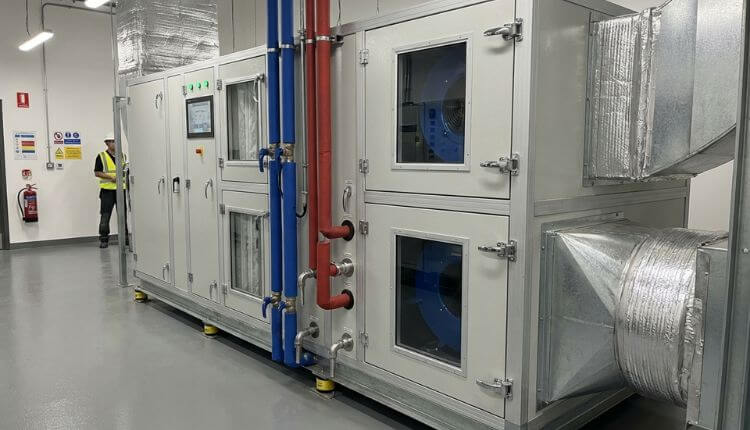
Proper AHU operation affects not only occupant comfort but also health, energy consumption, and regulatory compliance. Poor design or improper operation can lead to indoor air quality issues, excessive energy costs, or system failures. Understanding how components interact and how air behaves at each stage is essential for engineers, technicians, facility managers, and stakeholders seeking to optimize system performance.
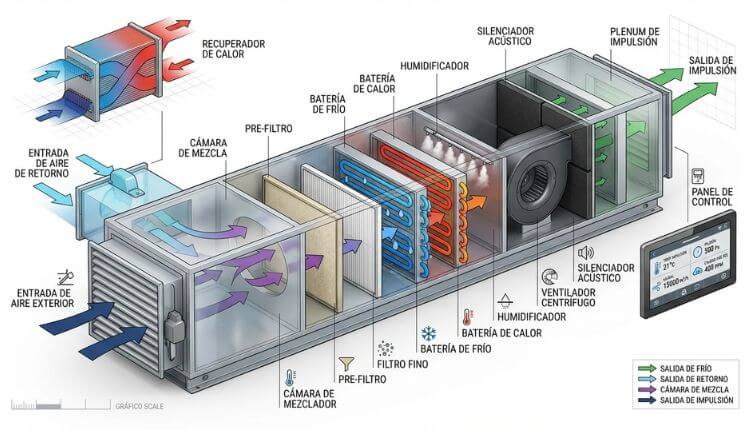
To understand the full process, it is necessary to examine the functional role of the main AHU components. Not merely what they are, but how they act together on the airflow.
The process begins with air intake. The AHU draws in outdoor air through motorized dampers. The system regulates the proportion of fresh air and recirculated air based on ventilation demand, indoor air quality, and the defined energy strategy.
Once captured, the air passes through multiple filtration stages. These remove solid particles, dust, pollen, and other contaminants before the air continues downstream. Typically, pre-filters capture coarse particles, followed by higher-efficiency filters for fine particulates. As filters become loaded, pressure drop increases and is monitored through differential pressure sensors.
After filtration, the air flows through thermal coils where heat exchange occurs to reach the required supply temperature. These coils may operate with hot water, chilled water, steam, or refrigerant, depending on the associated thermal generation system.
Fans move air through the AHU and duct network. Modern systems commonly use variable-speed drives, allowing airflow to adjust to real-time building demand, significantly improving energy efficiency.
In certain applications, humidity control is as important as temperature control. Some AHUs incorporate humidification or dehumidification systems to regulate moisture levels for comfort or specific requirements, such as in hospitals or industrial processes.
To reduce energy consumption, many AHUs integrate heat recovery systems. These capture thermal energy from exhaust air to preheat or precool incoming outdoor air, reducing load on heating and cooling systems.
Before final supply, air may pass through plenums that help stabilize airflow and silencers that reduce fan and airflow noise, improving acoustic comfort in conditioned spaces.
The entire process is monitored by temperature, pressure, airflow, and often air quality or CO₂ sensors. Real-time data allows the control system to dynamically adjust AHU operation according to actual conditions.
AHU operation follows a logical air treatment sequence:
This cycle operates continuously and dynamically adapts to indoor and outdoor conditions.
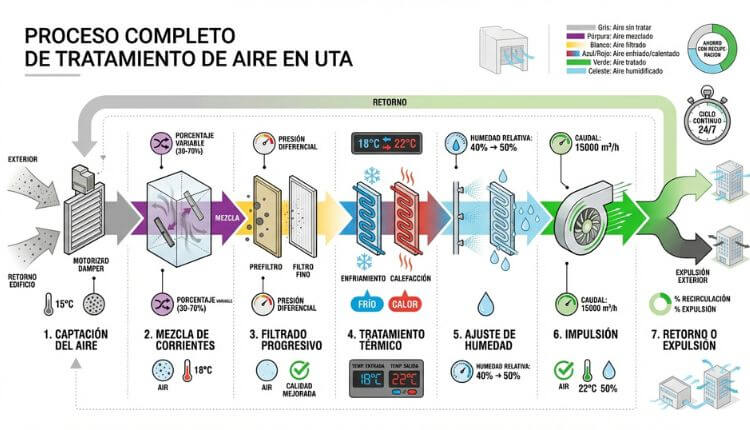
AHU behavior varies depending on the selected operational strategy.
All supplied air comes from outside. Common in hospitals or high-hygiene spaces, though energy demand is higher.
Part of the return air is reused, reducing energy consumption. Typical in offices and commercial buildings.
Thermal energy from exhaust air improves overall system efficiency.
In low-temperature regions, AHUs incorporate frost protection systems to preheat outdoor air and prevent coil freezing.
While the fundamental operating principle remains the same, operational priorities vary by application. Hospitals prioritize air quality and contaminant control. Office buildings focus on balancing comfort and energy efficiency. In industry, the AHU may be integrated into production processes with highly specific requirements.
A correctly sized and managed AHU delivers clean air, stable thermal comfort, reduced energy consumption, and longer system lifespan. It also supports compliance with energy efficiency and indoor air quality regulations.
When a project requires precise air control, high energy efficiency, or special operating conditions, professional expertise is essential. AHU design, selection, and commissioning must be tailored to each specific case to ensure optimal and reliable long-term performance.
A thorough understanding of AHU operation enables better decisions in HVAC design, operation, and optimization. When properly applied, the AHU becomes a key ally in ensuring comfort, health, and energy efficiency in any building.
At FTM Technologies, we design and implement custom solutions for demanding industries.
Let’s talk about your project.
The decision depends on the available space, the maintenance flexibility required, and whether future expansions or capacity adjustments are anticipated.
Abnormal pressure drops, frequent thermal fluctuations, or increases in energy consumption may indicate issues with filtration, ventilation, or control.
Yes, because even in temperate climates, significant amounts of energy can be recovered, resulting in medium-term operational savings.
These systems require more rigorous periodic inspections due to their sensitivity to scaling and the quality of the water used, especially in healthcare environments.
An expert supplier like FTM Technologies can tailor the design to the building’s actual conditions, ensuring optimal performance from initial installation to continuous operational control.